
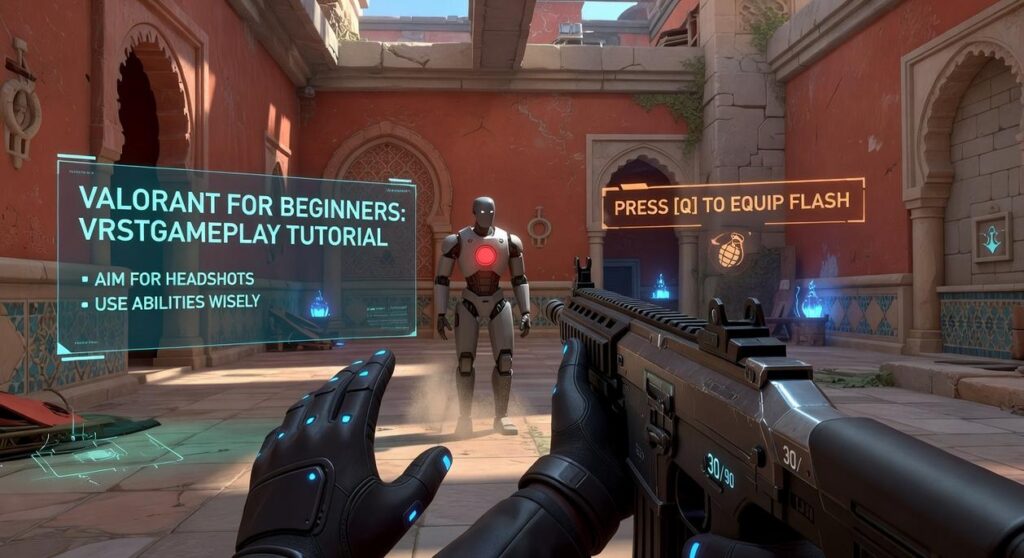
I’ve put thousands of hours into Valorant and I still learn something new every week.
You’re probably here because you just downloaded the game and got destroyed in your first match. Or maybe you’ve played a few rounds and can’t figure out why you keep dying before you even see the enemy.
valorant for beginners vrstgameplay starts with understanding one thing: this isn’t just a shooter. It’s not Call of Duty or Apex. It’s a 5v5 tactical game where your brain matters as much as your aim.
The learning curve is steep. I won’t sugarcoat that.
You need to learn spray patterns, agent abilities, map callouts, economy management, and when to plant the spike. It’s a lot. Most new players quit in their first week because they feel lost.
This guide cuts through the complexity. I’m going to show you the core mechanics that actually matter when you’re starting out. Not everything at once. Just what you need to stop feeling like you’re guessing every round.
By the end of this article, you’ll understand how Valorant works. You’ll know the basics of gunplay, how to use your agent, and the strategies that will help you contribute to your team instead of being dead weight.
No fluff. Just the foundation you need to start playing with confidence.
The Absolute Basics: Understanding How to Win
You know that scene in The Hunger Games where they explain the rules before everyone tries to kill each other?
That’s basically what I’m doing here.
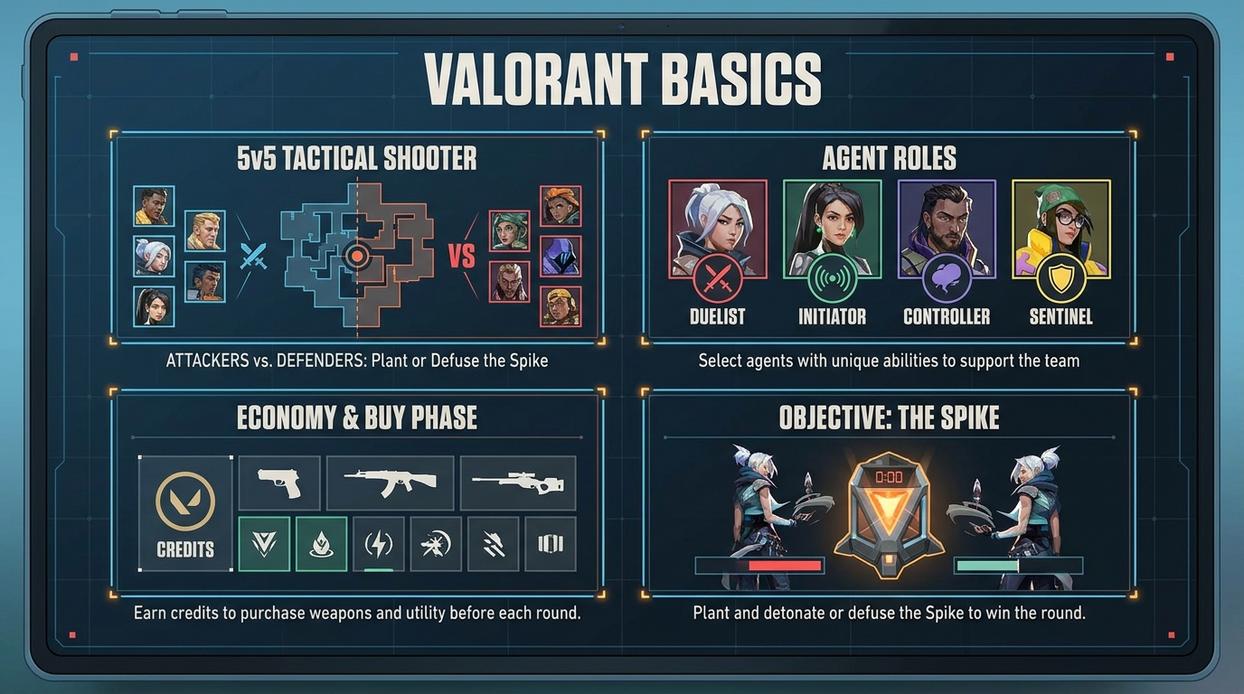
Vrstgameplay comes down to one simple thing. Plant the Spike or stop the other team from planting it. If you’re on Attack, you’re trying to plant. If you’re on Defense, you’re trying to stop them (or defuse if they get it down).
First team to 13 rounds wins.
But here’s where it gets interesting. You don’t just spawn with guns every round. You earn Creds, which is just the in-game money you use to buy weapons and abilities. Win a round? You get more Creds. Lose? You’re probably buying cheaper guns or saving up.
| Round | What Happens |
|———–|——————|
| 1-12 | You play one side (Attack or Defense) |
| Halftime | Teams switch sides |
| 13-24+ | You play the other side until someone hits 13 wins |
After 12 rounds, you swap. If you were attacking, now you’re defending.
This matters because some teams are way better on one side than the other. I’ve seen teams go up 10-2 on Defense, then completely fall apart when they have to attack.
For valorant for beginners vrstgameplay, this economy system is what separates good players from great ones. Knowing when to save and when to spend? That’s half the battle.
Choosing Your First Agent: Simple & Effective Picks
You just installed Valorant.
Now you’re staring at a roster of 25+ agents and have no idea where to start.
I’ve been there. Everyone has.
Some players say it doesn’t matter which agent you pick first. Just choose whoever looks cool and figure it out as you go. And sure, that works if you don’t mind getting destroyed for your first 20 matches.
But here’s what they’re missing.
The right starter agent makes learning this game so much easier. You’re already dealing with spray patterns, map callouts, and economy management. Why add complicated abilities on top of that?
Let me break down what you actually need to know.
Valorant has four roles. Duelists are your entry fraggers who push onto sites first. Controllers block sightlines with smokes. Initiators gather info and set up plays for your team. Sentinels lock down sites and watch flanks.
For valorant for beginners vrstgameplay, I always recommend starting with agents that won’t punish you for mistakes.
Phoenix is perfect if you like being aggressive. His flashes are simple to use and his self-heal ability forgives bad positioning. You can take fights, mess up, and still survive.
Sage teaches you how to support your team without requiring perfect aim. Her healing works on herself and teammates. Her wall and slow orbs are straightforward.
Brimstone has the easiest smokes in the game. You pull up a map, click where you want them, and they drop. That’s it. No lineups to memorize yet.
Here’s the move though.
Pick one or two of these agents and stick with them for at least 20 matches. I know it’s tempting to try everyone, but you need muscle memory with your abilities before you can focus on gunplay.
What about after you’ve got the basics down?
You’ll probably want to branch out. Maybe you’ll notice your team always needs an Initiator, so you’ll look at Sova or Breach. Or you’ll get tired of playing safe and want to try Jett or Reyna.
That’s fine. Just make sure you understand one agent completely before moving on. Too many new players jump around and never actually get good with anyone.
One more thing. Don’t let anyone pressure you into playing a role you hate just because the team needs it. You’ll learn faster playing an agent you actually enjoy.
Gunplay Fundamentals: Aim is Only Half the Battle
You can have perfect aim and still lose every gunfight.
Sounds backwards, right?
But I see it all the time. Players with decent crosshair placement who can’t figure out why their shots miss. They blame the game or their setup (maybe even which gaming mouse pad to chooose vrstgameplay).
The real problem? They’re moving when they shoot.
Let me explain the basics that actually matter.
Keep Your Crosshair Where Heads Will Be
This is the golden rule. Your crosshair should sit at head level, aimed at corners and doorways where enemies will peek.
Not at the ground. Not at chest level. Head level.
Pre-aim common angles and you’ll win fights before they even start.
Stand Still or Miss Everything
Here’s the mechanic that trips up beginners. You have to be completely still to shoot accurately in valorant for beginners vrstgameplay.
Moving even slightly? Your bullets go everywhere except where you’re aiming.
Counter-strafing lets you stop instantly by tapping the opposite movement key. If you’re moving right, tap left before you shoot. It’s not intuitive but it works.
Honestly, I’m still not sure why some players pick this up in hours while others take weeks. The timing feels different for everyone.
When to Tap, Burst, or Spray
Long range? Tap fire single shots.
Medium range? Burst two to four bullets.
Close range? You can spray, but even then, controlled bursts often work better.
The Vandal and Phantom are your primary rifles. One taps at any range (Vandal), the other has easier recoil (Phantom). Pick based on your style.
Low on credits? Grab a Spectre for close fights or a Sheriff if you can hit heads consistently.
That’s it. Master these and you’ll outgun players with fancier setups.
Beyond the Gun: Using Abilities for Tactical Advantage
Your abilities aren’t there to get kills.
I see new players hold onto their smokes and flashes all round, waiting for the perfect moment to secure a frag. Then they die with full utility and wonder why they’re stuck in low ranks.
Here’s what you need to understand. Abilities create opportunities. That’s it.
Some players argue that saving abilities for clutch moments is smart. They say you shouldn’t waste utility early in the round because you might need it later.
But that’s backwards thinking.
An unused ability is a wasted resource. If you die with a smoke or flash still available, you just gave the other team a free advantage.
Let me show you what I mean with real scenarios.
Use a smoke to cross an open area safely. Mid on most maps is a death trap without cover. Pop that smoke and move. You’re not trying to get a kill here (though you might). You’re trying to stay alive and get into position.
Use a flash to help your team enter a site. Your teammates are about to push B. Throw your flash over the wall. Even if you don’t blind anyone, you’re forcing defenders to turn away or reposition. That’s the advantage.
Use an info ability to check a dangerous corner without peeking. Recon dart, camera, drone. Whatever you’ve got. Check that angle before you walk into it. Better to know someone’s there than to guess.
This is basic gameplay for beginners vrstgameplay, but most players forget it under pressure.
The rule is simple. Don’t die with utility.
If the round’s ending and you haven’t used your abilities, you played it wrong. Those tools exist to help your team win rounds, not to collect dust in your inventory.
Playing Smart: Essential Game Sense and Communication
Your minimap isn’t just decoration.
It’s the difference between walking into a 1v3 and actually surviving the round.
When teammates spot enemies, those red dots pop up on your minimap. When abilities go off, you see them. This tells you where the fight is happening and where you need to be (or where you definitely shouldn’t be).
I see new players stare straight ahead the entire match. They miss rotations. They miss flanks. They die wondering where that enemy came from.
Check your minimap every few seconds. Make it a habit.
Now let’s talk about communication.
You don’t need a PhD in callouts. Just ping and use simple voice lines. “Two enemies B long” works better than silence. Your team can’t read your mind.
The ping system exists for a reason. Use it.
Here’s something most valorant for beginners vrstgameplay guides skip: trading kills.
Don’t run off alone like you’re the main character. If your teammate peeks and dies, you should be RIGHT THERE to fight their killer. That’s a trade. You lost one player but so did they.
Running in five seconds later? That’s just feeding them a free kill.
Stay with your team. Set up crossfires. Cover each other.
This isn’t about being the hero. It’s about winning rounds.
Your Journey in Valorant Starts Now
You now have what you need to start playing valorant for beginners vrstgameplay the right way.
I know the game feels overwhelming at first. There’s a lot happening on screen and everyone seems better than you.
But here’s the thing: breaking it down into these core pillars makes it manageable. Aim, abilities, and game sense. That’s it.
Focus on the fundamentals and you’ll improve faster than players chasing flashy plays. The wins will follow.
Here’s what to do next: Jump into a game right now. Pick one tip from this guide and focus on just that. Maybe it’s crosshair placement or learning one agent’s abilities.
Don’t try to master everything at once.
Most importantly, have fun while you’re learning. Every player started exactly where you are now.
The difference is they kept playing and got better one game at a time.
Your first match is waiting.