
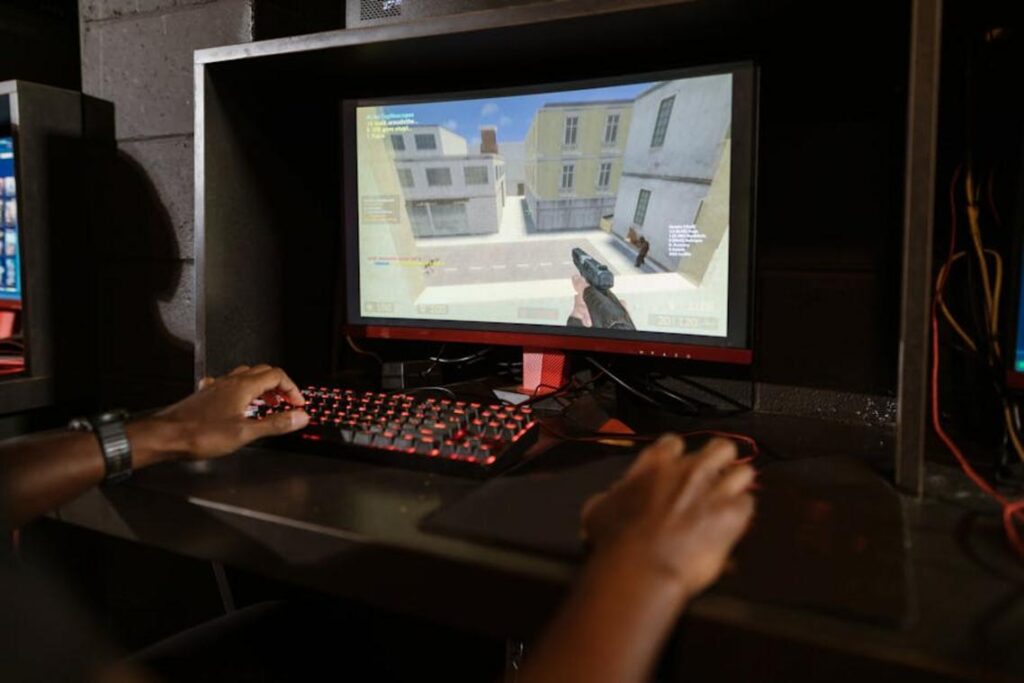
I’ve seen too many players with perfect aim stuck in the same rank for months.
You’re probably here because you can hit headshots but still lose games you should win. Your mechanics are solid but something’s missing.
Here’s the reality: aim only gets you so far in Valorant. The players climbing ranks right now aren’t just shooting better. They’re thinking better.
I spent time breaking down how top players actually approach matches. Not the flashy plays you see in highlight reels. The decisions they make before the round even starts.
This tutorial for valorant vrstgameplay gives you a complete framework for understanding strategy. I’ll show you how to read situations, make smarter plays, and stop relying on pure mechanics to carry you.
We’ve taken pro-level concepts and stripped out the complexity. What’s left are simple steps you can use in your next ranked game.
You’ll learn how to out-think opponents who might have better aim than you. How to make plays that swing rounds in your team’s favor. How to finally break through that rank ceiling.
No theory that sounds good but doesn’t work in real games. Just strategies that lead to more consistent wins.
The Foundation: Mastering Core Concepts Before Strategy
You can’t build a house without a foundation.
Same goes for Valorant. I see players jumping straight into advanced tactics when they don’t even understand the basics. Then they wonder why nothing works.
Some coaches say you should just play more games and figure it out naturally. That experience is the best teacher. And sure, playing helps. But wandering around without understanding core concepts? That’s just wasting time.
Here’s what actually matters.
Economy Management: The Unseen Skill
Every round in vrstgameplay comes down to credits. You need to know when to spend and when to save.
Full buy means everyone gets rifles and full armor. You do this when you have 3900+ credits. Save rounds happen when you can’t afford a proper buy (usually under 2000 credits). Force buy is the tricky one. It’s when you spend everything even though you can’t full buy because you NEED to win that specific round.
My rule? If losing the next round ends the half or the game, force buy. Otherwise, save together as a team.
Agent Roles & Team Composition
Strategy starts in agent select. Not when the round begins.
You’ve got four roles. Duelists entry frag and take first fights. Controllers smoke off areas and control sightlines. Initiators gather info and set up teammates. Sentinels hold sites and watch flanks.
A balanced team needs at least one of each type. I’ve won plenty of games with weird comps, but you’re making it harder on yourself.
(Pro tip: If you’re solo queuing and no one picks a controller, just pick one yourself. Smokes win rounds.)
Map Control: Owning Key Angles
Map control means you own a space and the enemy can’t push through it without a fight.
Take Ascent Mid as an example. If you control that area, you see anyone trying to rotate. You can hit A or B site. The other team has to guess where you’re going.
That’s information. And in this tutorial for valorant vrstgameplay, information is everything.
When you give up map control, you’re blind. The enemy can be anywhere. You’re reacting instead of acting.
Communication: The Ultimate Utility
Your callouts matter more than your aim sometimes.
Keep it simple. “Two A main” tells me what I need. “I think maybe there’s possibly someone over there” tells me nothing.
Call out abilities you hear. Call out where enemies are. Call out what you’re doing so your team can follow up.
That’s it. No essays over comms.
Attacking Strategies: How to Systematically Take a Site
You’ve probably been in this situation before.
Your team loads into the round and everyone just runs at a site hoping something works. No plan. No coordination. Just chaos.
It doesn’t have to be that way.
I’m going to walk you through four different approaches to taking a site. Each one has a purpose. Each one works in different situations.
The Default: Gaining Information
Think of the default as your baseline round. You’re not committing to anything yet.
Your team spreads across the map. One player mid. Two holding map control on one side. Two on the other. You’re looking for picks and gathering intel about where defenders are playing.
Here’s why this matters. Once you know the enemy setup, you can hit the weak point. If three defenders are stacked A, you rotate and take B with numbers.
The default works when you have time and want to play smart. It doesn’t work when you’re down players or the clock is running out.
The Fast Execute (5-Man Rush)
Now compare that to the five-man rush.
Everyone hits one site at the same time. Smokes go down in sequence. Flashes fly. You’re through the choke before defenders can rotate.
The timing here is everything. Your smokes need to land within two seconds of each other (not five or six). Your entry fragger goes in the moment that last smoke blooms.
I use this when the other team is playing slow or when we have an economic edge. If you’re all holding Vandals and they’re on Sheriffs, speed wins.
But here’s the catch. If they stack the site you’re hitting, you’re walking into a meat grinder.
The Split Push: Creating Pressure from Multiple Angles
This is where things get interesting.
Instead of five players hitting one site, you split the pressure. Four players execute on one site while one lurks on the opposite side of the map.
Let me give you a real example. On Haven, you send four players to C with full utility. One player lurks A long with light util.
What happens? Defenders on A have to make a choice. Rotate and help C (leaving A open for the lurk to plant). Or stay A and let their teammates fight a 2v4.
Either way, you win something.
The split works best on maps with three sites or long rotate times. It falls apart if your lurker gets caught early or if your main group can’t apply enough pressure.
Post-Plant Fundamentals: Playing for the Spike
You got the spike down. Now what?
Most players make the same mistake. They keep peeking and fighting when they should be playing time.
Here’s what I do. Set up crossfires that cover the spike from two angles. If a defender tries to defuse, they’re in someone’s crosshair no matter which side they approach from.
Play off the spike, not on it (unless you’re the last alive). Let them come to you. Use your ultimate abilities to deny space and burn time.
If you’re learning the fundamentals of round structure and site execution, check out gameplay for beginners vrstgameplay for more detailed breakdowns.
The difference between winning and losing post-plant usually comes down to patience. You have the advantage. Don’t throw it away by taking unnecessary fights.
Defensive Strategies: Building an Impenetrable Hold

You know what killed me most when I started playing defense?
I thought holding a site meant sitting in the same corner every round.
Spoiler: that doesn’t work. You get one kill, maybe two, then you’re dead and your team is scrambling for a retake they’re not ready for.
Here’s what I learned the hard way.
Standard Setups vs. Aggressive Peeks
Most players will tell you to play passive on defense. Hold your angle, gather info, and wait for your team to rotate.
And yeah, that works. Sometimes.
But I’ve lost count of how many rounds I watched slip away because we gave attackers too much space. They walked onto site with full utility and we couldn’t do anything about it.
The truth? Aggressive peeks have their place.
When you push early and catch an attacker off guard, you mess up their entire plan. Their smokes are in the wrong spots. Their flashes are mistimed. Suddenly they’re the ones reacting to you.
The risk is obvious. You die, they get a free site.
But the reward? You force them to respect you. They slow down. They second guess. That buys your team time (and in this tutorial for valorant vrstgameplay, time is everything).
I mix both approaches now. Some rounds I play patient. Others I take an early duel to keep them honest.
The Art of the Retake: When to Give Up a Site
I used to fight for every inch of ground.
Bad idea.
There were rounds where I’d stay on site 1v4, trying to be a hero. I’d die, they’d plant, and my team would lose the retake anyway because I wasn’t there to help.
You need to recognize when a site is lost. If you see three or four enemies pushing together with util, get out. Fall back to a position where you can actually help your team.
The best retakes happen when everyone is alive and coordinated. You combine your smokes, your flashes, your walls. You hit from multiple angles at once.
One person trying to clutch a defense rarely works. Five people executing a clean retake? That’s how you win rounds.
Information Denial: Using Smokes and Walls
Here’s something most people miss about Controller utility.
Smokes aren’t just for blocking sightlines. They’re for controlling where attackers can go.
When I smoke off certain areas, I’m not just saying “you can’t see here.” I’m saying “if you want to push, you have to go through this specific chokepoint.”
And guess what? I’m already aiming at that chokepoint.
Same with walls. A good wall doesn’t just block vision. It funnels enemies into spots where your team is set up and waiting.
Think about how to play valorant vrstgameplay at a higher level. It’s about prediction and control.
Mid-Round Rotations: Adapting to the Attack
I used to rotate too early or too late. Never at the right time.
Too early? I’d leave my site and they’d hit it anyway. Too late? My teammates would already be dead.
Now I watch for triggers. If I spot three enemies on my side of the map, I’m calling it and rotating. If I hear multiple pieces of utility going off somewhere else, that’s probably where they’re going.
The key is rotating safely. Don’t just sprint through mid and give them a free kill. Use your utility to cover yourself. Check corners. Maintain map control as you move.
Because a bad rotation is worse than no rotation at all.
Advanced Concepts for Climbing the Ranks
You want to rank up faster.
I’m going to show you two concepts that separate good players from great ones. Master these and you’ll see your win rate climb.
Ultimate Economy and Orb Control
Here’s what most players miss. Tracking enemy ultimates tells you exactly what they’re planning next.
When you know Brimstone has his ultimate ready, you adjust how you take site. When their Sage is close to resurrection, you play post-plant differently.
This is where orb control matters. Every ultimate orb you deny is one less game-changing ability the enemy gets to use. Every orb you secure speeds up your own win condition.
The benefit? You’re not just reacting anymore. You’re predicting their moves before they make them.
Baiting and Trading: The Buddy System
Trading kills sounds simple but most players do it wrong.
The concept is straightforward. You move with a teammate so if one dies, the other gets the return kill immediately. You maintain numbers advantage.
But here’s the real benefit. When you master trading, you turn their picks into even trades. And even trades favor the attacking team (you’re still executing while they’re scrambling to rotate).
Check out this tutorial for valorant vrstgameplay to see how pros position themselves for trades.
Move together. Refrag fast. Win more rounds.
That’s it.
Implementing Strategy for Consistent Victory
You came here because aim alone wasn’t cutting it anymore.
You were winning gunfights but losing rounds. It didn’t make sense.
This guide gave you the strategic framework you needed. The plays that actually win games in Valorant vrstgameplay.
You don’t have to feel stuck anymore. You know why those rounds slipped away despite your mechanics being on point.
The difference now is control. When you apply these offensive and defensive strategies, you dictate the pace. You create the opportunities instead of hoping they appear.
Here’s what to do in your next match: Pick one concept from this guide and focus on it. Maybe it’s coordinating a fast execute onto site. Or setting up a proper post-plant position that actually holds.
Just one thing. Get comfortable with it.
Then add another.
That’s how you build consistency. That’s how strategy becomes second nature.
Stop wondering why you’re losing rounds you should win. Start controlling the game.